Instructions
- Prepare Your Workspace: Preheat your oven to 375°F (190°C). Line a large baking sheet with parchment paper or aluminum foil for easier cleanup. If using foil, lightly grease it.
- Combine Meatloaf Ingredients: In a large mixing bowl, gently combine the ground beef, panko breadcrumbs, beaten egg, diced yellow onion, minced garlic, milk, Worcestershire sauce, Italian seasoning, salt, black pepper, and 2 tablespoons of chopped fresh parsley. Use your hands to mix until just combined. Be careful not to overmix, as this can lead to a tough meatloaf.
- Form the Base: On the prepared baking sheet, press about two-thirds of the meatloaf mixture into a rectangular shape, roughly 10 inches long, 6 inches wide, and about 1 inch thick. Create a slight indentation down the center of the rectangle, ensuring the edges are slightly raised to form a “trough” for the cheese.
- Create the Cheese Core: Arrange the mozzarella and cheddar cheese sticks or cubes in a single, even line down the center of the indentation you created in the meatloaf base. Make sure the cheese is tightly packed together to prevent gaps.
- Enclose the Cheese: Take the remaining one-third of the meatloaf mixture and carefully press it over the top of the cheese, sealing the cheese completely within the meatloaf. Use your hands to mold and shape the entire loaf, ensuring there are no visible cracks or openings where the cheese could escape during baking. Aim for a uniform, loaf-like shape.
- Prepare the Glaze: In a small bowl, whisk together the ketchup, brown sugar, apple cider vinegar, Dijon mustard, and garlic powder until smooth.
- Initial Bake: Place the meatloaf in the preheated oven and bake for 30 minutes without the glaze. This allows the meatloaf to firm up slightly before the glaze is applied.
- Apply the Glaze: After 30 minutes, remove the meatloaf from the oven. Evenly spread about two-thirds of the prepared glaze over the top and sides of the meatloaf.
- Continue Baking: Return the meatloaf to the oven and continue baking for another 25-35 minutes, or until an instant-read thermometer inserted into the thickest part of the meatloaf (avoiding the cheese core) registers 160°F (71°C). The glaze should be beautifully caramelized and slightly sticky.
- Rest the Meatloaf: Once cooked, remove the meatloaf from the oven. Loosely tent it with aluminum foil and let it rest for at least 10-15 minutes before slicing. This crucial step allows the juices to redistribute, resulting in a more tender and juicy meatloaf, and helps the cheese set slightly so it doesn’t all run out immediately.
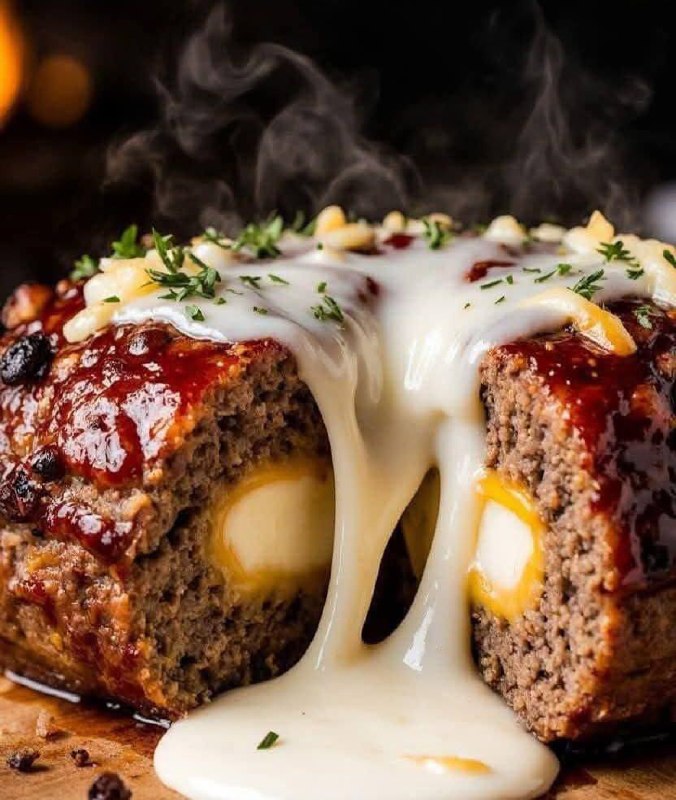
- Slice and Serve: Carefully transfer the meatloaf to a cutting board. Slice into thick pieces, allowing the molten cheese to gloriously ooze out. Drizzle with any remaining glaze from the baking sheet or the extra glaze you saved. Garnish with fresh chopped parsley, if desired, and serve hot.
Cooking Tips and Variations
Achieving that perfect “cheese lava” effect and a consistently juicy meatloaf requires a few key techniques. Here are some tips to ensure your Cheese Lava Meatloaf is a resounding success every time, along with ideas to customize it to your taste.
Tips for Success:
- Don’t Overmix the Meat: This is perhaps the most important rule for any meatloaf. Overmixing develops the proteins in the ground beef, leading to a dense, rubbery, and tough texture. Mix just until the ingredients are combined.
- Choose the Right Beef: For the juiciest meatloaf, an 80/20 ground chuck is ideal. The fat content contributes significantly to moisture and flavor. Leaner ground beef can result in a drier meatloaf.
- Good Melting Cheeses are Key: For the lava core, select cheeses known for their excellent melting properties. Low-moisture mozzarella, provolone, Monterey Jack, or even a mild cheddar work wonderfully. Avoid hard, crumbly cheeses or those with very low fat content, as they won’t create that desirable molten effect.
- Fully Encapsulate the Cheese: Ensure the cheese core is completely sealed within the meatloaf mixture. Any cracks or gaps can allow the cheese to escape prematurely during baking, reducing the “lava” effect. Take your time to mold the meatloaf carefully around the cheese.
- The Importance of Resting: Just like a good steak, meatloaf benefits immensely from a resting period after it comes out of the oven. This allows the internal juices to redistribute throughout the loaf, keeping it moist and preventing it from crumbling when sliced. It also gives the molten cheese a moment to stabilize slightly, making for a cleaner, more dramatic “lava” reveal.
- Preventing Cracks: While a few small cracks on the surface are normal, excessive cracking can sometimes be a sign of overmixing or not enough moisture. Ensuring your meatloaf mixture is well-hydrated and not overly compressed can help.
- Internal Temperature: Always use an instant-read thermometer to check for doneness. For ground beef, the safe internal temperature is 160°F (71°C). Insert the thermometer into the thickest part of the meatloaf, making sure to avoid the cheese core.
Variations:
- Cheese Choices: Experiment with different cheese combinations for the core. Provolone and Gouda offer a richer flavor, while Pepper Jack can add a subtle kick. A blend of mozzarella and provolone is a classic for extra stretch and creaminess.
- Glaze Alternatives:
- Spicy Glaze: Add a pinch of cayenne pepper or a dash of hot sauce to the classic glaze for a fiery kick.
- BBQ Glaze: Swap out the ketchup for your favorite BBQ sauce, then add a tablespoon of brown sugar and a splash of Worcestershire sauce for a smoky, tangy topping.
- Mushroom Gravy: Instead of a glaze, serve with a rich, homemade mushroom gravy poured over the sliced meatloaf for a more traditional, savory pairing.
- Add-ins for the Meatloaf:
- Vegetable Boost: Finely grated carrots, bell peppers, or zucchini can be added to the meatloaf mixture for extra nutrients and moisture. Sauté them briefly before adding to remove excess water.
- Herb Garden: Beyond parsley, try incorporating other fresh herbs like thyme, rosemary, or sage for different aromatic profiles.
- Smoky Flavor: A tablespoon of smoked paprika or a dash of liquid smoke can add a wonderful depth to the beef mixture.
- Crispy Bits: If you enjoy a bit of crunch, consider adding some crumbled cooked bacon bits to the meatloaf mixture.
- Meat Variations: While beef is classic, you can experiment with other ground meats. A mix of ground beef and pork can add even more flavor and moisture. Ground turkey or chicken can be used for a leaner option, but be mindful that they may result in a slightly drier meatloaf if not supplemented with extra moisture or fat.
Storage and Reheating
The Cheese Lava Meatloaf is just as delicious the next day, making it perfect for meal prep or enjoying leftovers. Proper storage and reheating will ensure it stays moist and flavorful.
Storage:
- Refrigeration: Allow the meatloaf to cool completely before storing. Once cool, transfer any leftover slices or the entire remaining loaf to an airtight container. It will keep fresh in the refrigerator for up to 3-4 days.
- Freezing: Leftover meatloaf freezes exceptionally well. Wrap individual slices tightly in plastic wrap, then an additional layer of aluminum foil, or place them in freezer-safe airtight containers or bags. Label with the date. Frozen meatloaf can be stored for up to 2-3 months. Thaw overnight in the refrigerator before reheating.
Reheating:
- Oven (Recommended for Best Results): This method is best for retaining moisture and helping the cheese re-melt beautifully.
- Preheat your oven to 300-325°F (150-160°C).
- Place slices of meatloaf in an oven-safe dish. You can add a splash of beef broth or water to the bottom of the dish to help keep it moist.
- Cover the dish tightly with aluminum foil to prevent drying out.
- Reheat for 20-30 minutes, or until heated through. The cheese should be soft and melty again.
- Microwave (Quickest Option): While convenient, the microwave can sometimes dry out meatloaf.
- Place a slice of meatloaf on a microwave-safe plate.
- Cover loosely with a damp paper towel to help retain moisture.
- Heat on medium power for 1-2 minutes, checking periodically, until heated through. Be careful not to overheat. The cheese may not be as perfectly molten as it would be from the oven, but it will still be delicious.
- Skillet (For Individual Slices): This method can give the exterior a nice crisp texture.
- Heat a lightly oiled non-stick skillet over medium-low heat.
- Place meatloaf slices in the skillet.
- Cover and cook for 5-7 minutes per side, or until heated through, flipping once.
Frequently Asked Questions
Why did my cheese leak out of the meatloaf?
Cheese leakage is usually due to one of two reasons: either the cheese core wasn’t fully sealed within the meatloaf mixture, or there were cracks in the meatloaf that developed during baking, allowing the molten cheese to escape. To prevent this, ensure you carefully mold the meatloaf around the cheese, pressing firmly to create a complete seal, and avoid overmixing the meat, which can lead to cracks.
Can I make this meatloaf ahead of time?
Absolutely! You can prepare the meatloaf mixture, form it around the cheese core, and place it on your baking sheet. Cover it tightly with plastic wrap and refrigerate for up to 24 hours before baking. You might need to add an extra 5-10 minutes to the baking time if baking directly from the refrigerator.
What are the best side dishes to serve with Cheese Lava Meatloaf?
This rich and hearty meatloaf pairs wonderfully with classic comfort food sides. Creamy mashed potatoes are a perfect match, as they can soak up any delicious juices and cheese. Roasted green beans, asparagus, or a simple garden salad add a fresh, vibrant contrast. Corn on the cob, mac and cheese, or a fluffy rice pilaf are also excellent choices.
My meatloaf turned out dry. What went wrong?
A dry meatloaf can be caused by several factors. The most common culprits are using too lean of ground beef (opt for 80/20 chuck for juiciness), overmixing the meatloaf mixture (which makes it tough), or overcooking. Ensure you’re measuring your ingredients correctly, not overworking the meat, and always use a meat thermometer to pull the meatloaf from the oven as soon as it reaches 160°F (71°C), followed by a proper resting period.