Instructions
- Prepare the Potatoes for Dumplings: Wash the potatoes thoroughly. You can either boil them in their skins or peel and cut them into large chunks. Place them in a large pot, cover with cold salted water, and bring to a boil. Cook until fork-tender, about 20-25 minutes for whole potatoes, or 15-20 minutes for chunks.
- Mash the Potatoes: Once cooked, drain the potatoes well. If boiled with skins, peel them while still warm. Pass the warm potatoes through a potato ricer or mash them thoroughly with a potato masher until completely smooth. It’s crucial to mash them while warm to avoid a gummy texture. Spread the mashed potatoes on a clean surface or in a wide bowl to allow some steam to escape and cool slightly for about 10-15 minutes.
- Make the Dumpling Dough: Once the mashed potatoes have cooled slightly (they should still be warm to the touch), add the egg, 1 teaspoon of salt, and gradually add the 250g of flour. Mix gently with your hands or a wooden spoon until a soft, pliable dough forms. Be careful not to overmix, as this can make the dumplings tough. The dough should be soft but not overly sticky. If it’s too sticky, add a little more flour, one tablespoon at a time, until it’s workable.
- Prepare the Meat Filling: While the potatoes are cooking, prepare the meat filling. Heat 1 tablespoon of olive oil or lard in a large skillet over medium heat. Add the finely chopped onion and sauté until softened and translucent, about 5-7 minutes. Add the minced garlic and cook for another minute until fragrant.
- Add the ground pork (or meat mixture) to the skillet, breaking it up with a spoon. Cook until the meat is browned and no longer pink. Drain any excess fat if necessary.
- Stir in the sweet paprika, smoked paprika (if using), black pepper, and 1/2 teaspoon salt. Cook for 1 minute, stirring constantly, to toast the spices. Pour in the beef broth or water, bring to a simmer, and cook until the liquid has mostly evaporated, about 5 minutes. Remove from heat and stir in the fresh chopped parsley. Let the filling cool slightly.
- Form and Fill the Dumplings: Lightly flour your hands and a clean work surface. Take a portion of the potato dough (about the size of a golf ball or slightly larger) and flatten it into a disc in your palm. Place about 1-2 teaspoons of the cooled meat filling in the center. Carefully bring the edges of the potato dough together to enclose the filling, sealing it completely. Gently roll it between your palms to form a smooth, round dumpling. Repeat with the remaining dough and filling. Arrange the formed dumplings on a lightly floured tray or plate to prevent sticking.
- Cook the Dumplings: Bring a large pot of lightly salted water to a rolling boil. Carefully drop the dumplings into the boiling water, a few at a time, ensuring not to overcrowd the pot. The dumplings will sink initially. Once they float to the surface, let them cook for another 5-7 minutes, depending on their size, to ensure they are cooked through.
- Using a slotted spoon, carefully remove the cooked dumplings from the water and transfer them to a plate. You can drizzle them with a little oil to prevent sticking while you prepare the sauce.
- Prepare the Paprika Cream Sauce: In a large, deep skillet or Dutch oven, heat 2 tablespoons of olive oil or lard over medium heat. Add the finely chopped onion and sauté until softened and translucent, about 5-7 minutes. Add the minced garlic and cook for another minute until fragrant.
- Remove the skillet from the heat for a moment to prevent the paprika from burning. Stir in the sweet Hungarian paprika and hot Hungarian paprika (if using). Stir constantly for about 30 seconds to release the aroma of the paprika.
- Return the skillet to medium heat. Gradually pour in the beef broth, stirring constantly to prevent lumps. Bring the sauce to a gentle simmer.
- In a small bowl, whisk together the 2 tablespoons of flour with 1/2 cup of cold water until smooth to create a slurry. Gradually whisk the slurry into the simmering sauce. Continue to whisk and simmer for 2-3 minutes until the sauce thickens to your desired consistency.
- Remove the sauce from the heat. Stir in the sour cream until fully incorporated and the sauce is smooth and creamy. Do not boil the sauce after adding sour cream, as it may curdle. Season the sauce with salt and black pepper to taste.
- Crispy Bacon Garnish: In a separate small skillet, cook the diced bacon over medium heat until crispy and golden brown. Remove the bacon bits with a slotted spoon and drain them on paper towels. Reserve a little of the rendered bacon fat if desired, for extra flavor.
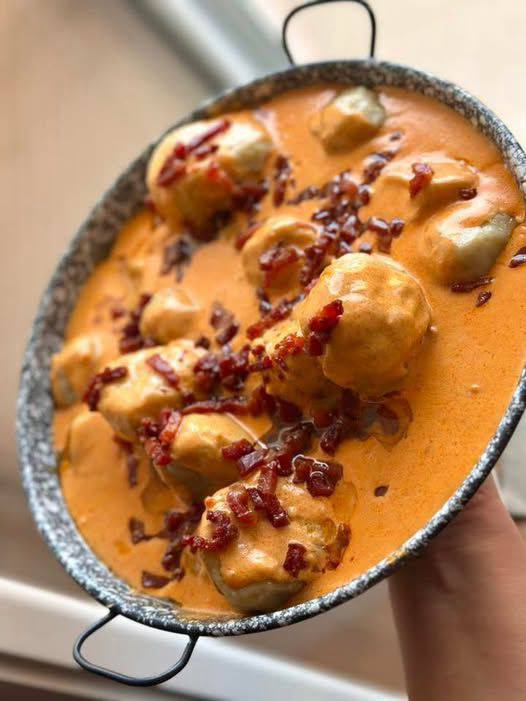
- Assemble and Serve: Gently add the cooked potato dumplings to the paprika cream sauce. Carefully stir to coat all the dumplings in the rich sauce. Let them simmer gently in the sauce for 5-10 minutes over low heat to allow the flavors to meld and the dumplings to absorb some of the sauce.
- Serve the Hortobágyi Húsos Krumpligombóc hot, garnished generously with the crispy bacon bits and a sprinkle of fresh chopped parsley or dill, if desired.
Cooking Tips and Variations
To achieve the best possible Hortobágyi Húsos Krumpligombóc, attention to a few key details will make all the difference. Firstly, the choice of potatoes for your dumplings is paramount. Opt for starchy varieties like Russet, Idaho, or Maris Piper. These potatoes have a lower moisture content and higher starch, which results in lighter, fluffier dumplings that hold their shape beautifully. Waxy potatoes, on the other hand, can lead to a gummy or dense texture, which is not what we’re aiming for here. Ensure you mash your potatoes while they are still warm, either through a ricer or with a masher, to achieve a smooth, lump-free consistency. Allowing them to cool slightly before adding the flour and egg is also crucial; this helps prevent the dough from becoming overly sticky and reduces the risk of tough dumplings.
The quality of your paprika is another non-negotiable element for an authentic Hungarian dish. Invest in good quality Hungarian sweet paprika. This isn’t just about color; it’s about the deep, nuanced flavor that defines Hungarian cuisine. If you like a little heat, a touch of hot Hungarian paprika can be added to the sauce, but always taste as you go. When adding paprika to the sauce, always remove the pan from the heat briefly before stirring it in. Paprika burns easily, and burnt paprika turns bitter, ruining the delicate balance of the sauce. Stir it in quickly, then immediately add your liquid (broth) to create that beautiful, rich base.
For the dumplings themselves, don’t overcrowd the pot when boiling them. Give them ample space to cook evenly and prevent them from sticking together. If they stick, they can tear and release their delicious filling. Cooking them in batches is always a good idea. Once they float, give them a few more minutes to ensure they are cooked through to the center. A common pitfall is undercooking the dumplings, which can result in a raw flour taste.
To prevent your sour cream sauce from curdling, ensure you remove the sauce from direct heat before stirring in the sour cream. Once incorporated, return it to very low heat only to warm through, but never bring it back to a vigorous boil. High heat can cause the proteins in the sour cream to separate, leading to a grainy texture. For an extra rich sauce, some Hungarian cooks will temper the sour cream by whisking a spoonful of the hot sauce into the sour cream before adding it back to the main pot; this slowly brings the sour cream up to temperature and reduces the risk of curdling.
Variations:
- Meat Filling Alternatives: While pork is traditional, you can easily substitute the ground pork with ground beef, ground chicken, or a mix of meats. For a vegetarian option, finely chopped and sautéed mushrooms (cremini or button) with a good blend of savory herbs like thyme and marjoran make an excellent and flavorful filling.
- Spicier Kick: For those who enjoy more heat, increase the amount of hot Hungarian paprika in both the filling and the sauce, or add a pinch of cayenne pepper.
- Herb Variations: While parsley is classic, fresh dill can also be a wonderful addition to the meat filling or as a garnish, offering a slightly different aromatic profile. Marjoram is also a traditional Hungarian herb that pairs beautifully with pork and paprika.
- Gluten-Free Option: To make this dish gluten-free, use a gluten-free all-purpose flour blend for both the dumplings and the sauce (ensure it’s a blend suitable for baking/thickening). Some potato dumplings can also be made with potato starch instead of flour, which is naturally gluten-free.
- Creamier Sauce: For an even richer and slightly tangier sauce, you can add a tablespoon or two of cream cheese (full-fat) along with the sour cream.
- Serving Suggestions: While this dish is incredibly hearty on its own, it pairs wonderfully with a simple side of pickled vegetables (like pickled cucumbers or cabbage) to cut through the richness, or a light green salad with a vinaigrette dressing.
Storage and Reheating
Hortobágyi Húsos Krumpligombóc makes for excellent leftovers, often tasting even better the next day as the flavors have more time to meld and deepen. Proper storage is key to maintaining its deliciousness and ensuring food safety.
Storage:
- Refrigeration: Once the dish has cooled to room temperature, transfer the leftovers to an airtight container. It can be safely stored in the refrigerator for up to 3-4 days. Ensure the container is well-sealed to prevent the dumplings from drying out and to protect the sauce from absorbing other odors in the fridge.
- Freezing: This dish freezes surprisingly well, especially the dumplings and sauce. If you plan to freeze, it’s best to freeze the dumplings and sauce together. Place the cooled leftovers in a freezer-safe airtight container or heavy-duty freezer bags. Remove as much air as possible to prevent freezer burn. It can be stored in the freezer for up to 2-3 months. Note that the texture of the potato dumplings might become slightly softer upon thawing and reheating, but the flavor will still be fantastic.
Reheating:
- Microwave: For a quick reheat, place a single serving of the dumplings and sauce in a microwave-safe dish. Cover loosely with a microwave-safe lid or microwave-safe plastic wrap, leaving a small vent. Heat on medium power for 2-3 minutes, stirring halfway through, until heated thoroughly. Be careful not to overheat, as this can make the dumplings tough and the sauce may separate.
- Stovetop (Recommended for Best Results): Transfer the desired amount of leftovers to a saucepan or skillet. Add a splash of beef broth or water (about 1-2 tablespoons per serving) to help loosen the sauce and prevent sticking. Heat over low to medium-low heat, stirring gently and frequently, until the dish is heated through. This method helps to maintain the creamy texture of the sauce and prevents the dumplings from drying out. If reheating from frozen, thaw overnight in the refrigerator first, then reheat on the stovetop. If reheating directly from frozen, it will take longer, and you may need to add more liquid and stir more frequently.
- Oven: If you have a larger batch to reheat, or prefer an oven-baked approach, place the leftovers in an oven-safe dish. Add a little extra broth or water, cover tightly with foil, and bake in a preheated oven at 160°C (325°F) for 20-30 minutes, or until heated through. Remove the foil for the last 5-10 minutes if you want a slightly crisper topping (if bacon is still present). This method is particularly good for maintaining the integrity of the dumplings.
When reheating, always ensure the food reaches an internal temperature of 74°C (165°F) to ensure it is safe to eat. Give it a good stir before serving to redistribute the sauce and flavors.
Frequently Asked Questions
What is the difference between Hortobágyi Húsos Krumpligombóc and Hortobágyi Palacsinta?
While both dishes share the “Hortobágyi” name and feature a savory meat filling in a rich paprika cream sauce, they differ significantly in their base. Hortobágyi Húsos Krumpligombóc uses tender potato dumplings (krumpligombóc) as the vessel for the meat filling. In contrast, Hortobágyi Palacsinta (often translated as Hortobágy Meat Pancakes) uses thin, savory crêpe-like pancakes, which are filled with the meat and then rolled or folded before being baked or simmered in the same delicious paprika cream sauce. Both are classic Hungarian comfort foods, but one uses potato dough and the other uses a pancake batter.
Can I make the potato dumplings ahead of time?
Yes, you can prepare the potato dumplings in advance. You can make the dumpling dough and form the dumplings, then store them on a lightly floured tray, covered with plastic wrap, in the refrigerator for up to 24 hours before cooking. Alternatively, you can fully cook the dumplings, then store them in an airtight container in the refrigerator for 1-2 days. If storing cooked dumplings, you might want to lightly toss them with a little oil to prevent sticking. When ready to serve, you can add the cooked dumplings directly to the hot paprika cream sauce to warm through.
What kind of meat is best for the filling?
Traditionally, ground pork or a mixture of ground pork and beef is used for the meat filling in Hortobágyi dishes. Pork offers a rich flavor and good fat content that keeps the filling moist. A 50/50 mix of pork and beef is also excellent, providing a deeper, more complex flavor profile. You can adapt the recipe to your preference, using ground turkey or chicken for a leaner option, though the flavor will be slightly different. The key is to season the meat well with onion, garlic, and Hungarian paprika to capture the authentic taste.
My sauce is too thin/too thick. What can I do?
If your paprika cream sauce is too thin, you can create a small slurry by whisking a teaspoon of flour or cornstarch with a tablespoon of cold water, then gradually whisking this into the simmering sauce. Let it simmer for a few minutes to thicken. Repeat if necessary until desired consistency is reached. If the sauce is too thick, simply thin it out by stirring in a little more beef broth, water, or even a splash of milk or cream until it reaches your preferred consistency. Remember to taste and adjust seasonings after making any adjustments to the sauce’s thickness.