Instructions
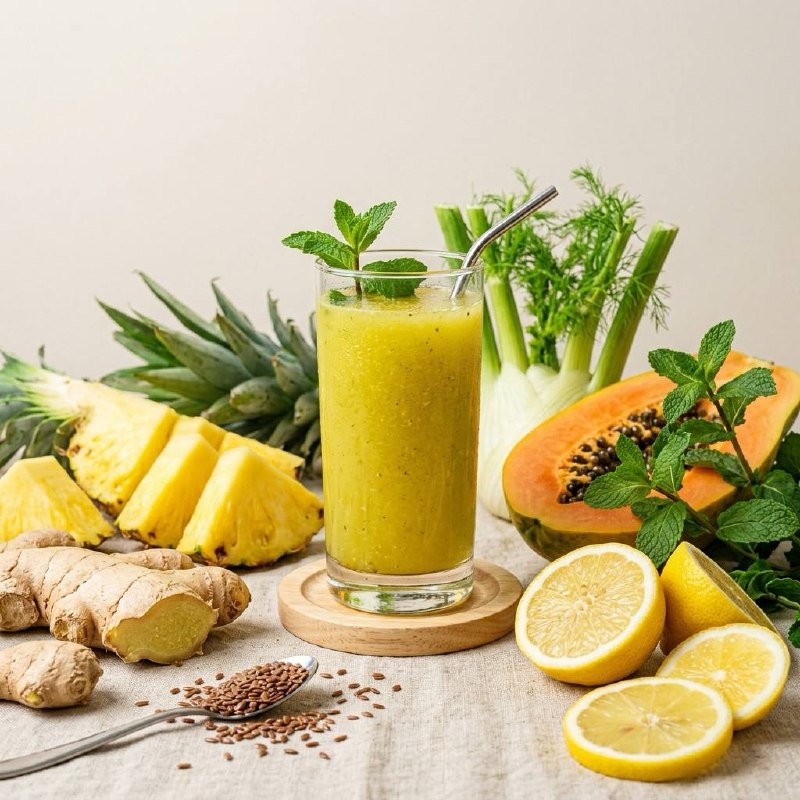
- Prepare Your Ingredients: Begin by washing all your fresh produce thoroughly. Carefully peel the pineapple, remove its fibrous core, and cut the flesh into manageable chunks. For the papaya, slice it in half lengthwise, scoop out the black seeds (though some prefer to keep a few for added pungency and benefits), and peel the skin before dicing the flesh. Peel the ginger root and the lemon half. Trim the fennel bulb, removing any tough outer layers and the core, then roughly chop it.
- Combine in Blender: Add the prepared pineapple chunks, papaya chunks, peeled ginger, peeled lemon half, and chopped fennel bulb to a high-speed blender.
- Add Flaxseeds and Liquid: Sprinkle in the flaxseeds. Pour in 1/2 cup of cold water or coconut water. You might need to adjust the amount of liquid later to achieve your desired consistency.
- Blend Until Smooth: Secure the lid on your blender and blend on high speed until the mixture is completely smooth and creamy. This may take 1-2 minutes, depending on your blender’s power. If the mixture is too thick, add a little more water or coconut water, one tablespoon at a time, until it reaches your preferred consistency.
- Taste and Adjust: Taste the juice and adjust if necessary. If you prefer it sweeter, you can add a small amount of natural sweetener like a date or a teaspoon of raw honey, though the fruits usually provide ample sweetness. If you desire more tang, add a squeeze of fresh lemon juice.
- Serve Immediately: Pour the freshly blended juice into a glass. For an extra refreshing experience, add a few ice cubes. Garnish with a sprig of fresh mint if desired.
Cooking Tips and Variations
For the best flavor and nutritional punch, always opt for fresh, ripe ingredients. A ripe pineapple should have a sweet aroma and yield slightly to pressure, while a ripe papaya will have a yellowish skin. Using organic produce, especially for ingredients like ginger and lemons where the peel might be included or heavily handled, can enhance the purity of your juice. Remember, this juice is a wonderful supplement to your daily hydration, not a replacement for plain water, so keep sipping on H2O throughout the day.
If you find that the pineapple and papaya aren’t sweet enough, consider adding a Medjool date (pitted) to the blender for natural sweetness, or a teaspoon of raw honey or maple syrup. For an extra kick of anti-inflammatory power, you can increase the amount of ginger slightly. If you’re a fan of greens, a handful of spinach or kale can be blended in for added nutrients without significantly altering the taste. For a creamier texture, swap out some of the water for unsweetened almond milk or a tablespoon of plain yogurt. If you prefer a thinner, pulp-free juice, you can strain the blended mixture through a fine-mesh sieve or nut milk bag, though this will reduce the fiber content.
Storage and Reheating
This “Juice for DIGESTION” is best enjoyed immediately after blending to maximize its nutritional value and vibrant flavor. The enzymes are most active when fresh, and some nutrients can degrade over time when exposed to air and light. However, if you have leftovers or wish to prepare it slightly in advance, you can store it.
Pour any remaining juice into an airtight container or a glass bottle with a tight-fitting lid. Fill the container as much as possible to minimize air exposure, which can cause oxidation and nutrient loss. Store the juice in the refrigerator for up to 24 hours. While it will still be palatable and provide some benefits after this time, its freshness and potency will diminish. Do not attempt to reheat this juice; it is designed to be a cold, refreshing beverage, and heating would destroy many of the beneficial enzymes and delicate vitamins.
Frequently Asked Questions
Can I use a juicer instead of a blender for this recipe?
While you certainly can use a juicer, remember that blending retains all the beneficial fiber from the fruits and vegetables. This fiber is crucial for digestive health, aiding in bowel regularity and acting as a prebiotic. If you use a juicer, you’ll get a thinner, pulp-free juice, but you’ll miss out on a significant portion of the fiber. For optimal digestive benefits, we recommend blending.
How often should I drink this juice?
This juice can be enjoyed daily as part of a balanced diet. Many people find it beneficial to drink it in the morning to kickstart their digestion or between meals. Listen to your body and adjust the frequency based on how you feel. Consistency is key for sustained digestive benefits.
Can I substitute any ingredients if I don’t have them?
Yes, some substitutions are possible, though they might alter the specific digestive benefits. For pineapple, mango or kiwi can also provide digestive enzymes. If you don’t have papaya, a ripe melon can offer a similar hydrating base. While ginger and fennel are quite unique in their anti-inflammatory and gas-reducing properties, a pinch of turmeric powder or a few celery stalks could be added for general health benefits. However, for the full “Juice for DIGESTION” effect, sticking to the original ingredients is recommended.
Is this juice suitable for children?
Generally, yes, this juice is suitable for children due to its natural ingredients. However, you might want to adjust the amount of ginger, as its spiciness can be strong for young palates. Always introduce new foods and drinks to children in small amounts and observe their reactions, especially if they have any known allergies or sensitivities.