Instructions
- Begin by thoroughly washing all your produce under cold running water. It’s crucial to remove any dirt, especially from the beetroots and celery, as these are root vegetables and grow close to the soil.
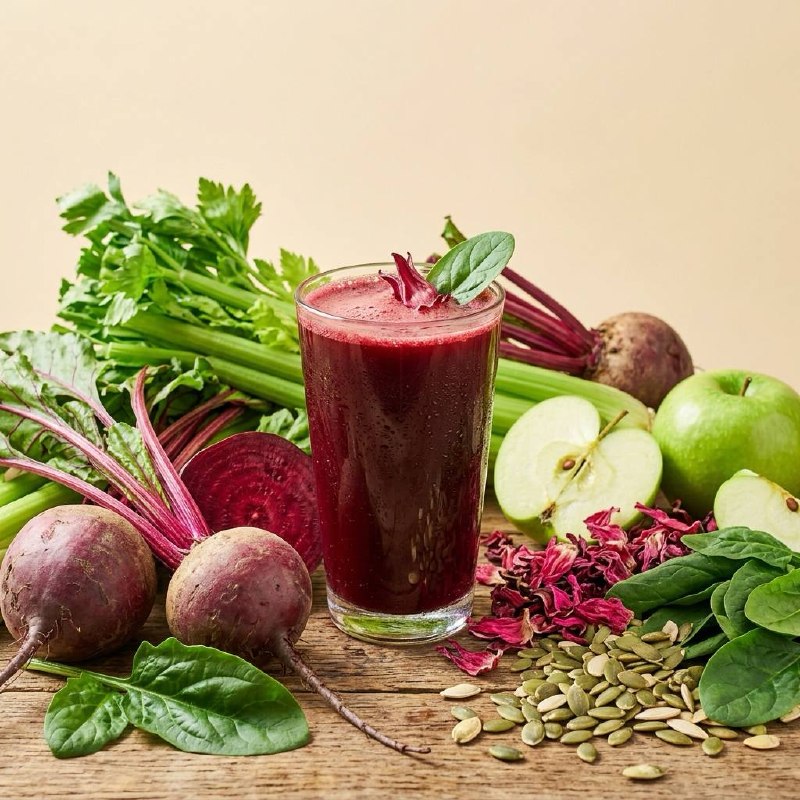
- Prepare your ingredients for juicing. Trim the ends off the beetroots and quarter them. Core the green apple and cut it into quarters. Roughly chop the celery stalks into manageable pieces for your juicer. Ensure the spinach leaves are clean and free from any tough stems.
- Assemble your juicer according to the manufacturer’s instructions. Place a large glass or pitcher beneath the spout to collect the fresh juice.
- Start by feeding the harder ingredients into the juicer first, such as the beetroot and green apple. This helps to extract more juice and push through the softer ingredients effectively.
- Next, feed the celery stalks into the juicer. The fibrous nature of celery also aids in pushing other ingredients through and adds a significant amount of liquid.
- Finally, add the spinach leaves. You might need to feed them in batches or alternate them with a harder ingredient to ensure maximum juice extraction, as leafy greens can sometimes be challenging for juicers.
- If your juice is too thick for your preference, or if your juicer struggles with the ingredients, you can add a small amount of purified water (about 1/4 cup) to help thin it out or assist in the juicing process.
- Once all ingredients have been juiced, give the juice a gentle stir with a spoon to ensure all the flavors are well combined.
- Pour the freshly made “Natural Pressure Balancer” into a serving glass.
- For an extra touch of flavor, texture, and visual appeal, garnish with a sprinkle of pumpkin seeds, a few dried hibiscus petals, and a fresh mint sprig.
- Serve immediately and enjoy the invigorating taste and healthful benefits of your homemade juice.
Cooking Tips and Variations
To ensure you get the most out of your “Natural Pressure Balancer,” always prioritize fresh, organic produce. Organic ingredients are often richer in nutrients and free from pesticides, which is especially important when juicing. For the best flavor and nutritional punch, choose firm, unblemished beetroots, crisp green apples, vibrant green celery, and fresh, unwilted spinach. The quality of your ingredients directly impacts the quality of your juice.
Don’t be afraid to experiment with variations to suit your taste or to boost specific health benefits. A small knob of fresh ginger (about 1 inch, peeled) can add a delightful spicy kick and is known for its anti-inflammatory properties. For an extra citrusy zing and a boost of Vitamin C, consider adding half a lemon, peeled. If you prefer a less earthy flavor, a small piece of cucumber can add extra hydration and a milder taste. You can also swap out spinach for other leafy greens like kale or Swiss chard for different nutrient profiles.
The sweetness of this juice can be easily adjusted. If your green apple is particularly tart, or if you prefer a sweeter drink, you can add a small amount of a natural sweetener like a date (pitted) or a tiny drizzle of maple syrup directly into the juicer with other ingredients. Conversely, if you prefer a tarter profile, a little extra lemon juice can do the trick. Remember, the goal is to create a drink that you genuinely enjoy, making it easier to incorporate into your routine.
For maximum nutrient retention and the freshest taste, it’s always best to consume your “Natural Pressure Balancer” immediately after juicing. However, if you need to store it, pour the juice into an airtight glass container, filling it to the very top to minimize air exposure, which can lead to oxidation and nutrient loss. Store it in the refrigerator for no more than 24-48 hours. While it will still be good, some nutrients may degrade over time.
The choice between a juicer and a high-speed blender can significantly impact the final product. A juicer separates the pulp from the liquid, resulting in a smooth, pulp-free drink that’s easy for the body to absorb. This is ideal for those who prefer a traditional juice consistency. If you use a high-speed blender, you’ll get a thicker, smoothie-like consistency that retains all the fiber from the ingredients. If using a blender, you’ll likely need to add more water to achieve a drinkable consistency. Both methods have their advantages, so choose the one that best fits your preference and equipment.
Finally, remember that the pulp left over from juicing isn’t necessarily waste! Beetroot and apple pulp can be incorporated into compost, used in baking (like muffins or bread for added fiber), or even added to vegetable broth for extra nutrients and flavor. Get creative and reduce food waste!
Storage and Reheating
The “Natural Pressure Balancer” is best enjoyed immediately after preparation. Freshly made juice retains the highest concentration of vitamins, minerals, and enzymes. The moment juice is exposed to air, light, and heat, oxidation begins, which can degrade its nutritional value and alter its taste.
If you absolutely must store it, pour the juice into an airtight glass container. Fill the container to the very brim, leaving as little air space as possible. Air is the enemy of fresh juice, as it accelerates oxidation. Seal the container tightly and refrigerate it immediately. Stored this way, the juice can maintain a good portion of its quality for up to 24-48 hours. Beyond this timeframe, while still safe to drink, the nutritional benefits will significantly diminish, and the flavor may become less vibrant. Do not attempt to reheat this juice; it is designed to be a refreshing, cold beverage. Reheating would destroy many of the heat-sensitive nutrients and enzymes.
Frequently Asked Questions
Can I make this juice ahead of time for the week?
While you can store this juice for up to 48 hours in an airtight container in the refrigerator, it’s highly recommended to consume it fresh. The nutritional content, especially enzymes and certain vitamins, starts to degrade rapidly after juicing. For optimal benefits, make it daily or every other day.
Is this juice suitable for everyone, including those with specific health conditions?
This juice is made from natural ingredients and is generally considered healthy. However, beetroot is high in oxalates, which can be a concern for individuals prone to kidney stones. Also, if you are on medication for blood pressure, consult your doctor before regularly consuming large quantities of beetroot juice, as it can lower blood pressure. Always consult with a healthcare professional regarding dietary changes if you have underlying health conditions.
What if I don’t have a juicer? Can I use a blender instead?
Yes, you can use a high-speed blender, but the consistency will be different. To make it in a blender, you’ll need to add more water (start with 1/2 to 1 cup) to help blend the ingredients. Blend until smooth, then strain the mixture through a fine-mesh sieve or a nut milk bag to remove the pulp, achieving a juice-like consistency. If you prefer a thicker, more fibrous drink, you can skip the straining step and enjoy it as a smoothie.